


The Loose Knob of Project Management
Overcome Procrastination in Project Management
Picture the scene from It’s a Wonderful Life, where George Bailey ascends his creaky staircase, grabbing the loose banister knob that wobbles free in his hand. He knows it needs fixing. He could grab a bit of glue, or a screwdriver, tighten it, and be done. Yet, repeatedly, he grabs that same loose knob, grumbles, puts it back, and moves on.
That loose knob is a perfect metaphor for procrastination and has a place in project management. There is always something we know we should tackle but repeatedly defer. These can often lead to bigger problems down the line and be impediments to greater successes.
In project and program management, procrastination often shows up as neglecting the fundamentals. Why? Is it the demanding environment, the thrill of complex tasks, or the push for quick wins? These pressures can stop us from taking critical early steps like setting clear objectives, aligning stakeholders, or building solid communication plans, risking project stability.
According to PMI’s 2024 Pulse of the Profession report, 60% of project failures stem from poor scope definition and inadequate stakeholder engagement. These are issues that fester when we procrastinate on the groundwork. And there are other basics we often miss:
Communication is another victim of procrastination and vague details, putting projects at risk. Project managers know they need to share regular updates with stakeholders and define team roles early on. Yet, a kickoff meeting is skipped, we assume everyone’s aligned. Such oversights lead to missed expectations, rework, weakened trust, and potential failure.
Procrastination also compromises reporting. Creating effective reports demands time, yet managers produce vague summaries or omit critical metrics, weakening decision-making and stakeholder trust. Reports can overwhelm with excessive detail or lack essential clarity. Tailoring content and detail to the audience is crucial. In today’s data-driven landscape, skills in tools like Power BI or Jira for real-time reporting are highly sought after, yet many delay upskilling, relying on outdated manual methods.
High-profile project failures, such as the UK Birmingham City Council’s 2022 Oracle ERP implementation, which triggered bankruptcy in September 20231, consistently stem from neglecting project management fundamentals: insufficient planning, ineffective communication, weak governance, bypassed processes, and deficient leadership.
The good news? Like George Bailey’s loose newel cap, procrastination in project management stems from human psychology: fear, cognitive overload, or cultures that stifle concerns. Experiences that trigger stresses and deter scope definition, dopamine triggers prioritize tasks over alignment.
Procrastination isn’t always a choice. Sometimes there are deeper barriers. Project managers may delay action due to a lack of empowerment, fear of repercussions, or a corporate culture that constrains voices.
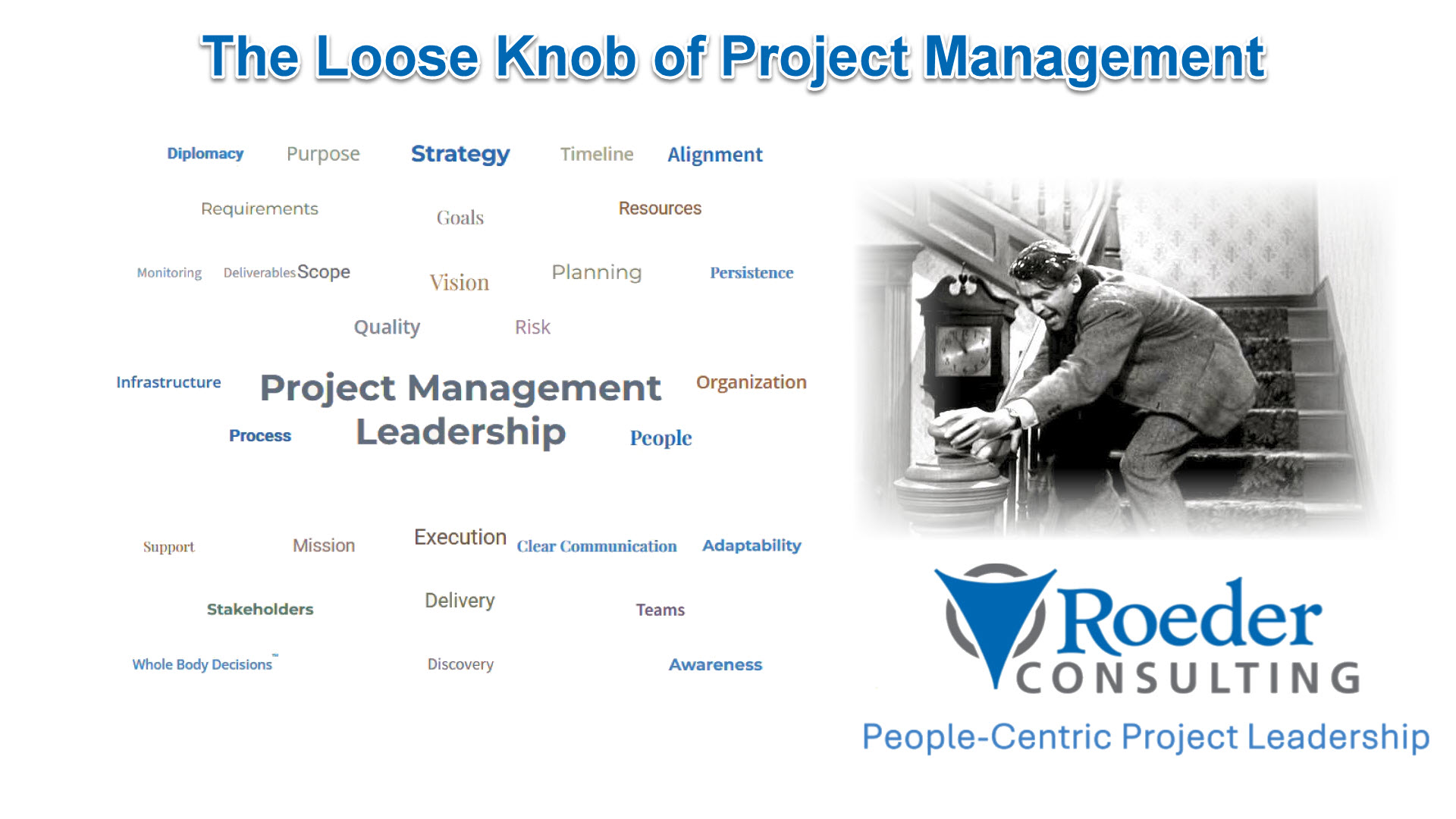
← Click the image at left to watch a short 4 minute video on “The Loose Knob of Project Management”
Don’t Let Your Project Become the Next Loose Knob—Act Now with Roeder Consulting
At Roeder Consulting, we collaborate with clients to tackle these with concise tools like task chunking to ease overwhelm, focused and tailored reporting, stakeholder interviews for clarity, and psychological safety practices to empower voices. These ensure teams nail the portfolio, program, and project fundamentals needed to build a governance platform for repeated project success.
Ready to foster a culture of project management success? Start HERE to explore our services and elevate your team’s performance.
Questions or ready to start? Reach out to our experienced team at info@roederconsulting.com or click Contact at the top right of the page to submit details about how we can help you.
