
Change Management Support
As part of our Execution Partnership, we provide Change Management Advisory Services as required. We deploy a structured, people-centered approach. Whether your change is driven by strategic business transformation, technology implementation, or operational realignment, our advisory services are designed to ensure successful user adoption and lasting competitive advantage.
“There is nothing permanent except change” ~ Heraclitus of Ephesus
Effective change management requires an approach tailored to your culture and goals. Roeder Consulting blends industry best practices with our proven methodology that is configurable based on your needs. To customize our approach to you, we assess organizational readiness and stakeholder alignment. Then, we work alongside your team to develop a comprehensive change management plan that includes communication strategies, training programs (as required), and performance metrics.
Leadership engagement is central to our approach. Therefore, we work closely with executives and sponsors to ensure active, visible support throughout the change lifecycle. Above all, our advisors help teams navigate stakeholder resistance, clarify change management roles, and reinforce new behaviors to sustain the momentum.
Roeder Consulting’s track record includes successful change management advisory efforts across public-sector, nonprofit, and corporate environments. Our team leads change initiatives for enterprise software roll-outs, business process optimization, and strategic planning, to name a few. We translate complex change into both clear and actionable steps. As a result, we empower teams and deliver measurable business results.

All projects are change
Earn Buy In with Roeder’s Circle of Support™
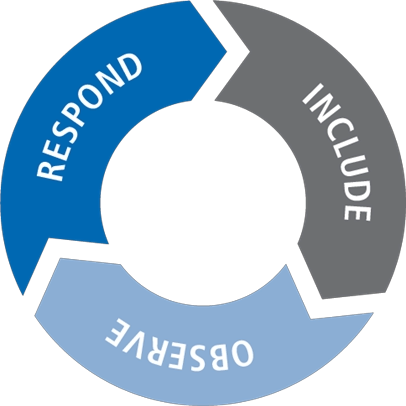
Our unique Circle of Support™ guides individuals and teams towards lasting and effective change. To do so,it consists of three steps. Altogether, our process is easy to understand. However, the tool is most effective in the hands of one of Roeder Consulting’s experienced change management advisory consultants.
Include
Firstly, we help you select the right people to be part of the process. Inclusion means making each person feel like they are part of the process. Further, the “Include” step means genuinely listening to each stakeholder’s feedback.
Observe
Secondly, we deploy our science-backed tools to understand which stage they have achieved in their personal change journey. Roeder Consulting’s deploys several best practice frameworks for understanding each individuals behavior.
Respond
Finally, we respond. We intentionally make this the third step in our process. Responses are most effective when based on Observations. That’s because there is no single best way to respond to concerns and criticism.
As a result, we deliver sustainable organizational transformation. We have helped many organizations Change successfully. Contact us to begin.
Change Management Advisory
Doing vs. Advising: A Strategic Distinction
In business transformation efforts, there’s a critical difference between actively executing change and advising clients on how to lead it themselves. Roeder Consulting has found great success by supporting clients as they drive transformation from within. This advisory-focused change management approach trains organizations to embed change deeply and sustainably, rather than relying on external execution.
Empowering You and Your Team as Change Agents
Roeder’s philosophy centers on equipping clients to lead their own evolution. We provide coaching, strategic guidance, and a suite of tools, frameworks, and templates—but the client’s team remains on the field, executing the transformational initiative. This model fosters client ownership, accountability, and long-term adoption. After all, you must live with the transformation, so it’s best for you and your team to be deeply Included in shaping it. When staff are Included in the process, they’re more likely to embrace new systems, behaviors, and mindsets.
Support That Strengthens Execution
Our role is to be a catalyst and a guide. We help clarify intentions, align stakeholders, and build momentum. Roeder’s change management advisory support includes structured planning, leadership coaching, and tailored resources that simplify complexity. But we don’t just advise—we walk alongside you, ensuring you have what you need to succeed. This collaborative model has consistently led to stronger client team engagement and more sustainable outcomes.
Adapting Through Feedback Loops
Transformation is rarely linear. That’s why Roeder incorporates feedback loops into every engagement. As you implement change, we gather insights from real-time experiences and then help you adjust the strategy accordingly. This iterative process ensures that plans remain relevant and grounded in reality. By learning as we go, we help you refine your approach and accelerate meaningful progress.
CASE STUDY: Roeder Consulting transformed a Top 15 US bank’s digital presence. We provided Change Management Advisory Services for the launch of a redesigned mobile app for over 1 million users. To deliver this successful result, our experts collaborated with stakeholders, crafted a tailored plan, and delivered targeted training. As a result, our client successfully launched a modern, user-friendly app that boosted customer satisfaction and solidified the bank’s leadership in digital innovation.
Change Management FAQ’s
1. What is change management and why is it important?
Change management is a structured approach to transitioning individuals, teams, and organizations from a current state to a desired future state. When deployed correctly, Change Management Consulting Services helps minimize resistance, improve adoption, and ensure that changes lead to long-term success.
2. Why should I consider consultants for change management?
Change management consultants bring specialized expertise, proven frameworks, and an objective perspective. With this in mind, consultants are well-prepared to help organizations navigate complex transitions. Specifically, good change consultants align stakeholders, organize change efforts, and implement strategies that drive sustainable change and measurable results. Leaders with significant experience leading change efforts are one of the top drivers of the success of a change initiatives.
3. How do Prosci, Kotter, and Roeder’s change management models compare?
- Prosci focuses on individual change through its ADKAR model (Awareness, Desire, Knowledge, Ability, Reinforcement).
- Kotter emphasizes organizational transformation with an 8-step process, including creating urgency and building coalitions.
- Roeder’s model centers on people-focused change, highlighting disciplines like empathy, clear communication, and stakeholder engagement. Each model offers unique strengths.
Therefore, the best choice depends on your organization’s goals and culture. If you prefer Proci’s ADKAR method, or a hybrid of that approach and Roeder’s, Prosci Change Practitioners are available through Roeder Consulting.
4. What are the benefits of a flexible approach to change management?
In today’s rapidly changing business environment, your ability to change quickly and effectively is critical. In other words, a flexible approach allows you to adapt strategies based on evolving needs, stakeholder feedback, and unexpected challenges. Flexibility, therefore, improves resilience, enhances team engagement, and increases the likelihood of successful change implementation.
5. What are the key steps in a successful change management process?
An effective change management process typically includes:
- Define the change and its impact
- Engage stakeholders early
- Communicate clearly and consistently
- Provide training and support
- Track progress and adjusting as needed
- Reinforce the change to ensure long-term adoption
6. How does change management improve employee engagement?
By involving employees in the change process, addressing their concerns, and providing support, proper change management support fosters trust and collaboration. Accordingly, engaged employees are more likely to embrace change and contribute to its success. Roeder Consulting deploys its Circle of Support™ methodology (discussed above) to gain adoption.
7. What tools and techniques do you use in change management?
Common change management tools include stakeholder analysis, communication plans, training programs, feedback loops, and performance tracking dashboards. Techniques vary by framework but often include coaching, workshops, and pulse surveys.
8. How do I measure the success of a change management initiative?
Common measures of success are: adoption rates, employee feedback, performance improvements, and achievement of business objectives. Tracking progress against original goals and using project documentation helps validate outcomes.
9. Can change management be applied to digital transformation projects?
Absolutely. Change management is critical for digital transformation. Proper change techniques help teams adopt new technologies, shift mindsets, and align processes with strategic goals. Change management helps digital initiatives deliver value that is embraced across the organization.
10. Where can I find expert change management support?
Consulting firms, such as Roeder Consulting, offer tailored change management consulting and advisory services. These experts help organizations design flexible strategies, engage stakeholders, and implement frameworks to achieve lasting results. See our consulting page for more details.
11. Why is it important that the consultant I select can do more than just change management?
Selecting a consultant with expertise beyond change management ensures a more holistic approach to organizational transformation. Change projects often involve overlapping areas such as project recovery, strategic planning, stakeholder engagement, and process improvement. A consultant who understands each of these domains can integrate change management more successfully. This breadth provides the ability to understand broader business goals, adapt to evolving needs, and deliver more sustainable results. Flexibility is especially valuable when navigating complex changes that require cross-functional coordination and long-term impact.
Contact us for more detail. Also, projectmanagement.com offers various articles about change management.
From Strategy to Sustainable Outcomes
In summary, aligning on a strategy is just the beginning. True transformation requires more than agreement—it demands a deliberate, people-first approach to change. At Roeder Consulting, we guide you from vision to execution through structured planning, stakeholder engagement, and adaptive action. We base our change management services on proven methodologies, including The Roeder Method™ and the Circle of Support™. Roeder’s frameworks promote inclusion, encourage observation, and tailored responses. Consequently, we ensure your team actively participates in change rather than having it imposed upon them.
Let’s talk about how we can help you Change Successfully. Contact us today.